

Calm, household-focused planning
Emergency Food Supply Planning for Short Disruptions
An emergency food supply should reflect the people in your household, likely disruptions, available water, preparation options and storage space. Build it deliberately, document it and review it—without panic buying.
Build a supply around real household needs
People and duration
List household members and the period you are planning for. Count actual breakfasts, main meals and other food rather than using a vague number of packages.
Water
Food that requires water adds to your water plan. Record preparation water separately from drinking and hygiene needs, and follow current official local preparedness guidance.
Preparation
Consider what happens if normal utilities are unavailable. Do not use fuel-burning cooking equipment indoors unless it is specifically designed and approved for that use, with all safety instructions followed.
Dietary and medical needs
Review ingredients and allergens for every household member. Emergency food does not replace medical advice or any condition-specific nutrition plan.
A simple inventory and rotation method
- Create an inventory with product name, quantity, storage location and package date information.
- Store products according to the instructions on their labels.
- Review the inventory on a regular calendar schedule.
- Use and replace items before their marked dates rather than forgetting them.
- Check packaging for damage and keep preparation instructions accessible.
- Update the plan when household size, dietary needs or equipment changes.
Compare food options, then complete the wider plan
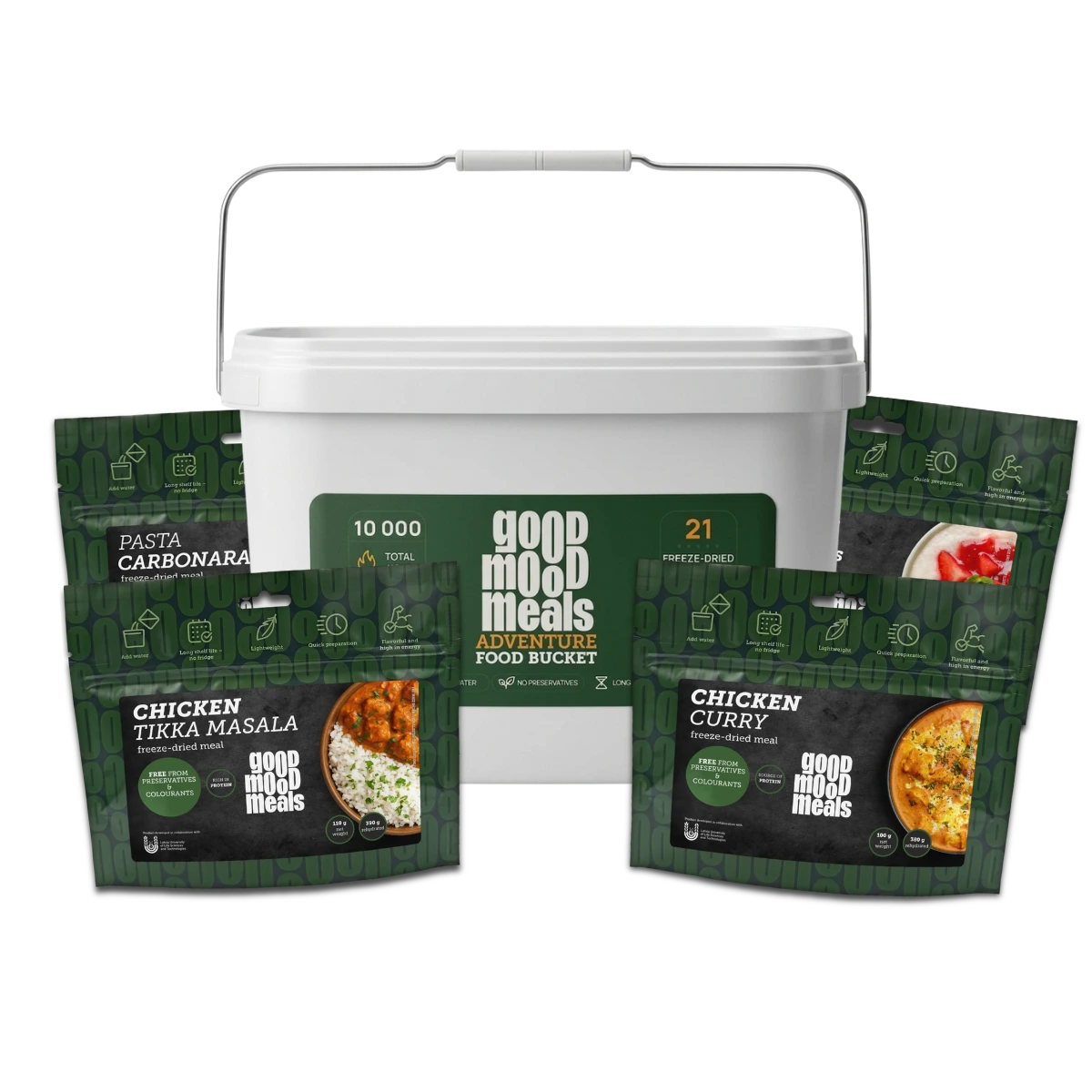
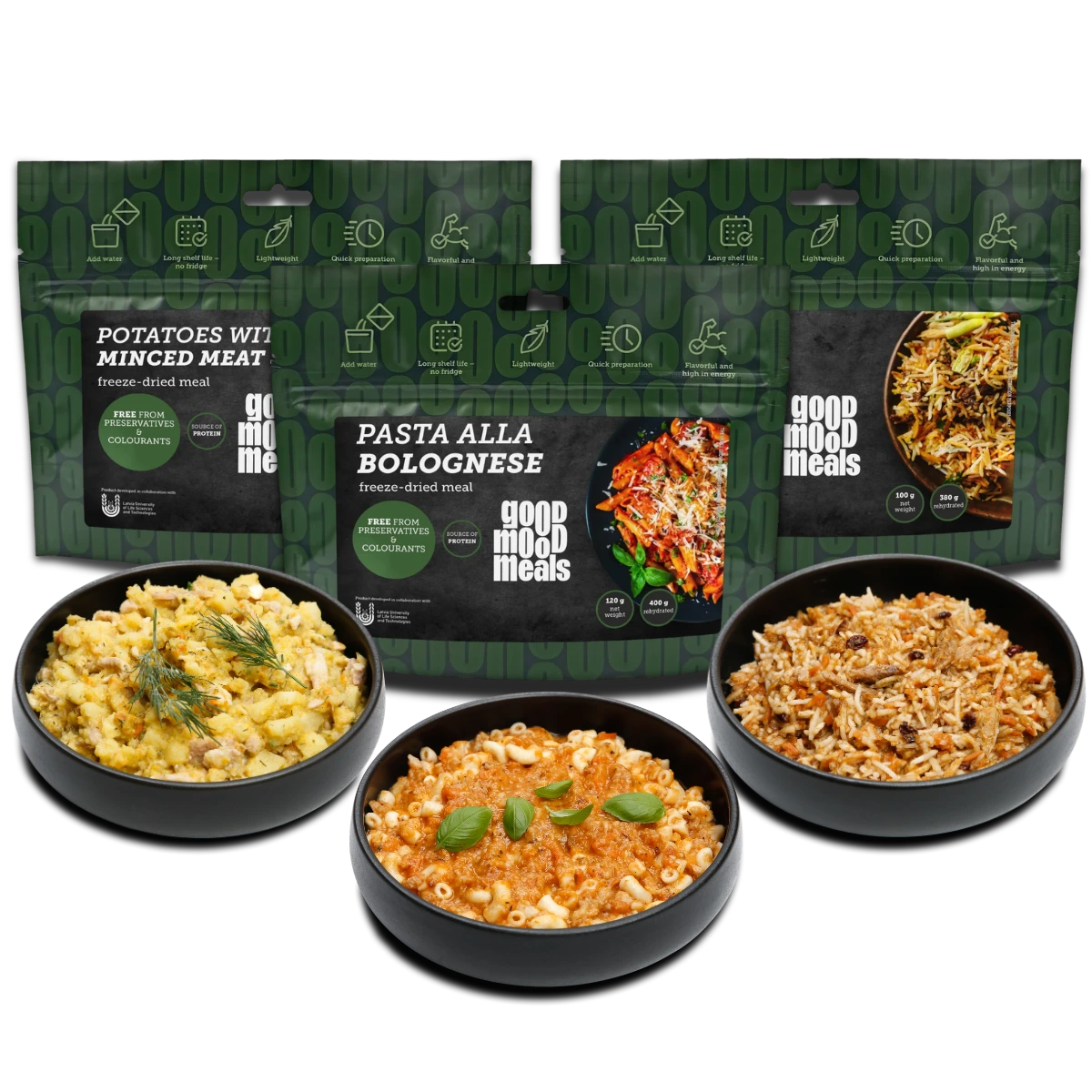
Browse meal kits, compare individual freeze-dried meals, or review the 72-Hour Meal Kit product page for its current contents and instructions. The full shop provides the wider assortment. Food is only one part of preparedness; use current guidance from your local authorities for water, communications, medicines, lighting and other essentials.
Emergency food supply questions
How much emergency food should I store?
Follow current guidance from the authorities responsible for preparedness where you live, then adapt it to household size, dietary needs and realistic disruptions. Convert the target period into a meal-by-meal inventory.
Should an emergency supply contain only freeze-dried meals?
No. A resilient plan can use different suitable foods. Consider water requirements, preparation, storage, household preferences and label instructions when deciding the mix.
How often should I review stored food?
Set a regular schedule and also review it after household or dietary changes. Check quantities, marked dates, package condition, storage instructions and whether your preparation equipment still matches the plan.
Is a meal kit a complete emergency plan?
No. A meal kit addresses only part of food planning. It does not replace a broader household plan based on official local advice.
Explore the food categories
The main freeze-dried meals guide explains the product type and preparation considerations. For trips rather than household disruptions, use the distinct travel food guide.